Before There Was a Mission
Before there was Bishop's Mission, there was a moment in my life that I didn't fully understand would eventually lead me here.
I was a police officer, and I was suicidal.
In one of my darkest moments, it was my dogs staring back at me that gave me a reason not to pull the trigger.
I remember thinking: Who would take care of them?
I didn't want them ending up in a rescue. I didn't want them euthanized. After everything they had already been through with me, I couldn't stand the thought of leaving them behind and not knowing what would happen to them.
They needed me.
At that moment, that was enough.
Looking back, I understand something now that I couldn't put into words then.
They weren't "just dogs." They were my family. And without any special training, certification or title, they were helping me survive.
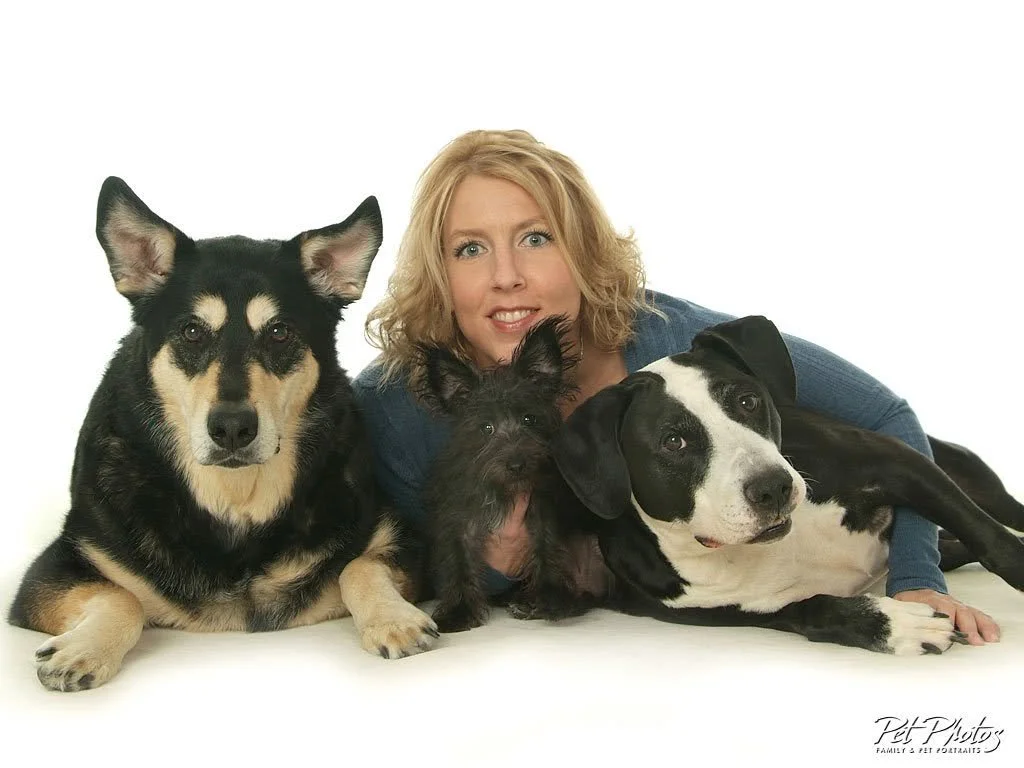
Max (black & white) and Chloe (Shepard mix). Chelsie in the middle came later (after the dark moment), she was my first small dog.
Finding My Way Back Through Animals
Eventually, I left law enforcement and found myself returning to my roots in the animal profession.
I started working at a local veterinary office while also learning how to groom dogs part time. Grooming eventually became the more practical career path, and over time I developed a reputation for working with animals who struggled elsewhere — the dogs who were difficult, fearful, misunderstood or had simply been told they couldn't come back.
I learned how to slow down. How to listen without words. How to earn trust instead of demanding it.
Years later, I realized something else had been happening during all of that.
While I thought I was helping them, they were helping me heal.
Animals have an incredible ability to reach places in us that people sometimes can't.
And then along came Bishop.
The Dog Who Showed Me What I Couldn't See
During Bishop's training, I began learning about training service dogs for PTSD.
And that's when I had an aha moment I wasn't expecting.
I realized I was dealing with PTSD myself.
When you grow up in a responder family and then spend your own career inside that world, certain things simply feel normal. You live it every day. You don't necessarily recognize what's happening because you don't know anything different.
Until somebody points it out.
Once again, a dog helped show me the way.
Bishop and I began our own journey together. He learned to recognize signs of PTSD and perform tasks to help me. And because Bishop is every bit the workaholic I am, his skills expanded beyond that. I know he can assist me if I'm hurt, struggling or unable to help myself.
But our journey wasn't going to stop with me.
I began training in peer support and continued educating myself about trauma, crisis response and how to better serve the responder community.
Bishop stayed right beside me.
Eventually, we became an on-call peer support team.
We began responding where we were needed, assisting with peer support and critical incident response and providing K9 assistance when appropriate.
As a responder myself, I know that difficult moments don't happen according to business hours or conveniently inside county lines.
So neither does our Mission.
We go where we're needed.
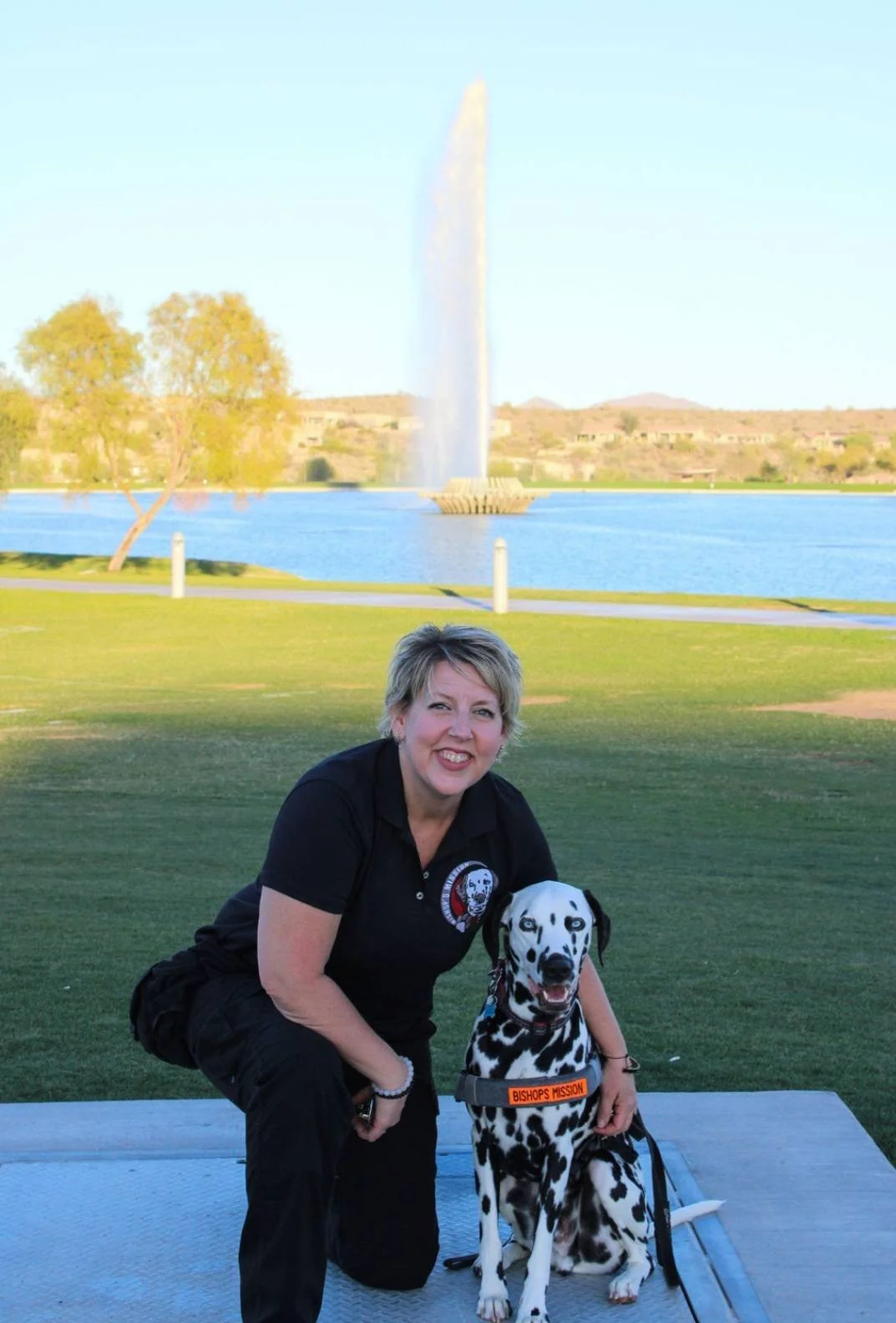
The relationship that changed it all!
Then We Started Seeing Something Else
As Bishop and I spent more time in responder communities, I began seeing departments incorporating dogs into their own wellness and support programs.
And I loved it.
We've known emotionally what science continues to demonstrate: the human-animal connection can have a profound effect on our well-being.
I have watched responders light up when we walk into a room with Bishop.
And I started thinking about the responders who can't have a dog of their own.
What if their department had one?
What if that connection wasn't available only after something terrible happened, but was part of their everyday environment?
I want those programs to succeed.
So I listened.
I learned.
And as an animal professional, I started noticing gaps.
If we're going to ask these dogs to help take care of our responders, who is helping take care of the dogs?
That's when Bishop's Mission began building resources around K9 wellness, handler education, emergency preparedness and the everyday things that can help these programs remain healthy and sustainable.
Because supporting one department dog doesn't affect only one dog.
That dog may touch dozens — even hundreds — of responders throughout its working life.
The impact ripples outward.
But Not Every Working Dog Wears a Badge
There was another lesson I still needed to learn.
And Bishop taught me that one, too.
I ended up in an emergency veterinary hospital with him and was told he had bladder stones causing an obstruction. Without treatment, his bladder could rupture.
He needed surgery.
I'd owned dogs my entire life, but this felt completely different.
I'd never had a service dog before Bishop.
When a dog has been trained to perform tasks for you, knows you inside and out, works as your right hand, and has become someone you rely upon as much as they rely upon you, the relationship is difficult to explain until you've experienced it.
I was fortunate.
I found a way to make the surgery happen.
But afterward, I couldn't stop thinking:
What if I couldn't have?
What if the only thing standing between a responder or veteran and saving their working partner was money?
What if someone had to make the decision to let their dog go simply because they couldn't afford the emergency care?
That hit hard.
And that's when I became determined to create an Emergency Veterinary Fund for working dogs.
Because I never want a responder or veteran standing in an emergency hospital believing they have to say goodbye to the dog who has spent its life helping them simply because the finances aren't there.
If Bishop's Mission can contribute enough to help keep that decision from falling entirely on someone's shoulders, then every bit of work it took to build this will have been worth it.
That's Why Bishop's Mission Exists
Today, Bishop's Mission does more than what Bishop and I originally set out to do.
But the heart of it hasn't changed.
We support responders through peer support when they need someone who understands.
We support K9 programs so the dogs helping our responder communities have resources behind them.
We provide education and wellness resources to help working K9 teams remain healthy, prepared and successful.
And we're building emergency veterinary support for working dogs because sometimes the team that spends its life answering the call needs someone to answer theirs.
When you support Bishop's Mission, you aren't supporting a collection of unrelated programs.
You’re helping create a ripple.
A healthier working dog can support a handler.
That team may support a veteran navigating everyday life.
That team may support an entire department.
That team may search for someone who is missing, solve a case, or help bring closure to a family.
That dog may reach a responder who is struggling quietly.
And somewhere, there may be someone whose dog gives them exactly what mine gave me all those years ago:
One more reason to stay.
I know how much that can matter.
Because before there was Bishop's Mission, there were simply a pair of eyes staring back at me when I needed them most.
Everything we've built since then started there.
Mission Ready. Team Supported.