What is a “Working Dog”? it may be more than you think
When most people hear the term working K9, they immediately picture a patrol dog — the K9 working alongside law enforcement and trained in areas such as narcotics, explosives, electronics detection, apprehension, or search work.
At Bishop's Mission, our definition is broader.
We recognize that there are many dogs going to work every day in service to people and their communities. Their jobs may look very different, but they have something important in common:
They have a job to do.
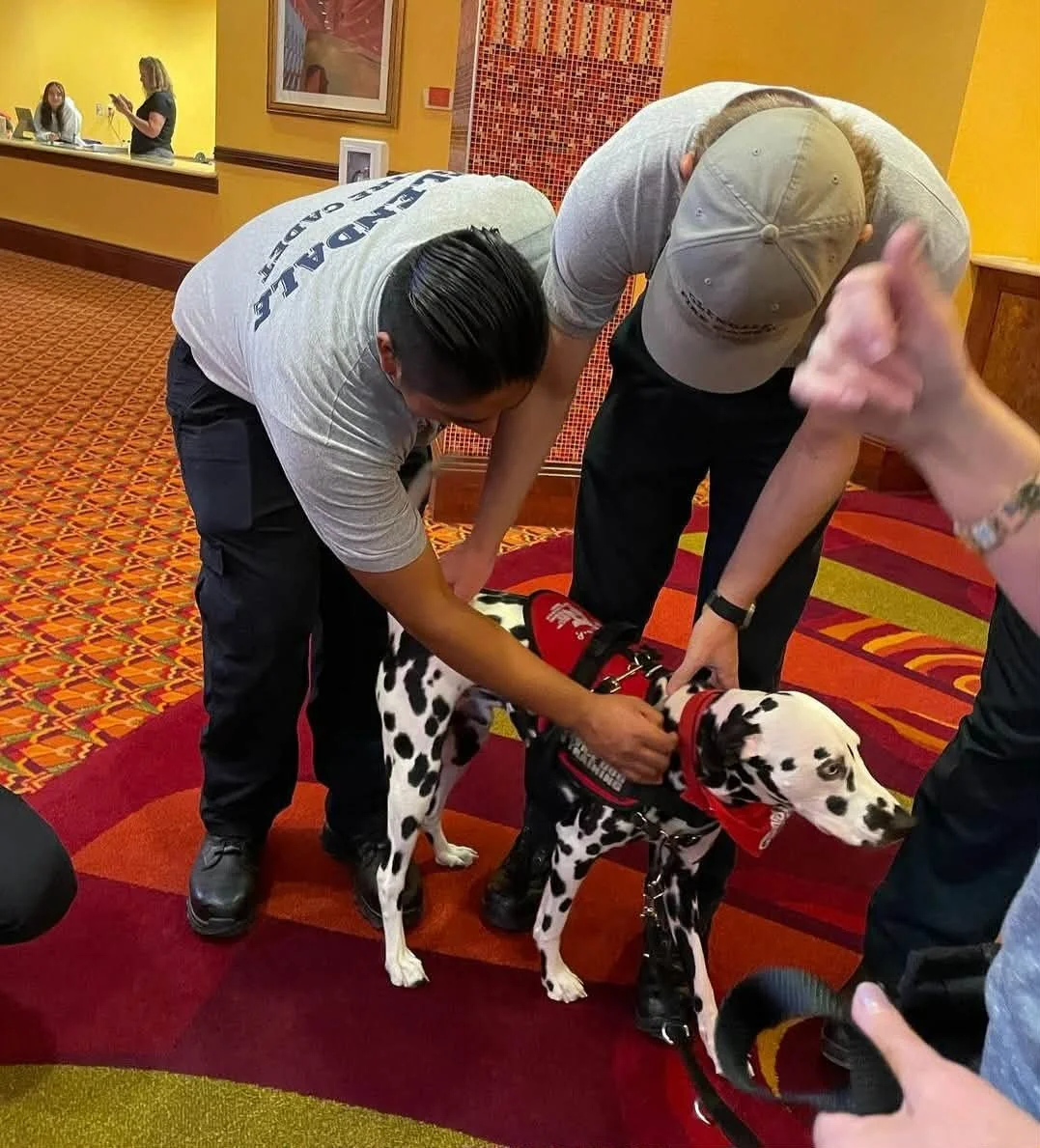
Bishop in his training days doing therapy work before he reached service level
Working K9s, Service Dogs & Therapy Dogs: What's the Difference?
A working K9 may work in law enforcement, corrections, security, search and rescue, detection, or another specialized role. These dogs receive extensive training to perform specific duties alongside their handlers.
A service dog is individually trained to perform specific tasks for a person with a disability. Those tasks may assist with physical, medical, neurological, or psychiatric disabilities. Service dogs meeting the requirements of the Americans with Disabilities Act (ADA) have specific federal public-access protections.
A therapy dog works with a handler to provide comfort and support to other people. You'll find therapy teams in hospitals, senior communities, schools, crisis-response settings and, increasingly, first responder wellness programs. Reputable programs generally require dogs to demonstrate appropriate temperament, obedience and behavior and to meet the standards of the organization or facility in which they work.
Their jobs are different.
But all of these dogs perform work that benefits people.
That's why Bishop's Mission recognizes them as working dogs.
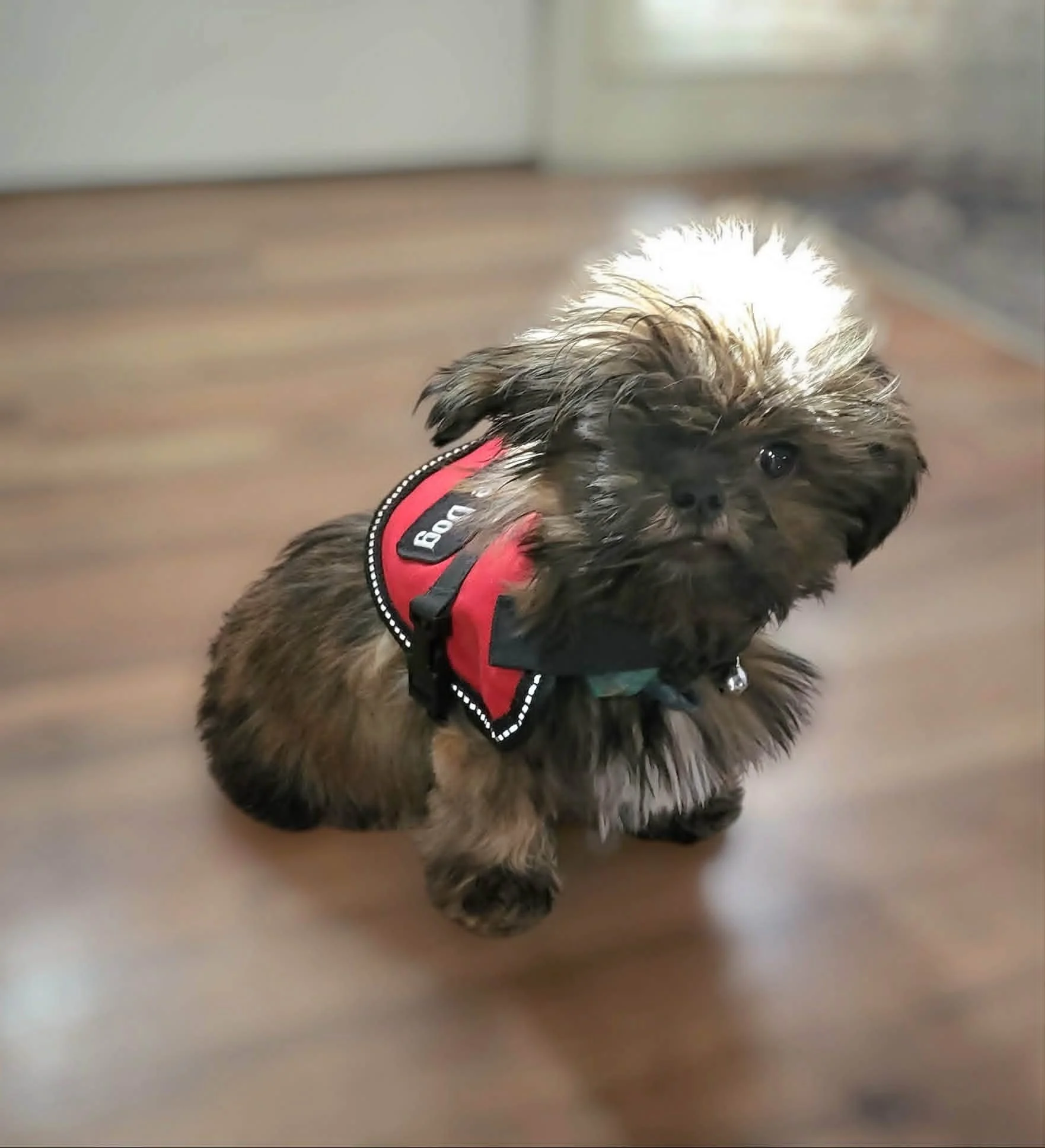
Willie sees the world from a different perspective. At Bishop’s Mission, we’re changing the perspective on how working dogs are supported throughout their careers.
Working Dogs Have Occupational Needs, Too
Working dogs aren't simply pets who happen to go to work.
Their careers can expose them to physical demands, changing environments, long working hours, travel, repeated training, emotionally charged situations and other stressors that the average companion animal may not routinely encounter.
We know how profoundly animals can affect human well-being. We also continue to learn more about the relationship between dogs and their handlers, including the ways dogs may respond physiologically and behaviorally to human stress.
So we started asking a different question:
If these dogs spend their careers taking care of us, what are we doing to take care of them throughout their careers?
That question is at the heart of the Bishop's Mission K9 Occupational Wellness Program.
Maintenance — Not Just Reaction
Our goal is not to wait until a working dog is injured, sick or unable to perform.
We want to help handlers support their dogs throughout their working lives.
That may include, but not limited to education in areas such as:
Animal CPR and first aid
Canine behavior and psychology
Skin and coat care
Canine nutrition
Wellness and preventative care
When resources are available, Bishop's Mission may also help provide food, supplements, skin and coat products, equipment and other supplies that support a working dog's health and performance.
We have also developed relationships with professionals and organizations willing to help working K9 teams access supportive services such as PEMF therapy, chiropractic care, massage and other wellness modalities when appropriate.
And when the unexpected happens, our Emergency Veterinary Fund may help with veterinary expenses when funding is available.
Because sometimes the difference between getting additional diagnostics or treatment and having to make a heartbreaking decision is simply whether the money is there.
What Does This Look Like in Real Life?
One of the working dogs we're currently helping shows exactly why this program exists.
For privacy, we'll call him Cujo.
Cujo is a working dog who performs hospital security duties. He has been diagnosed with Valley Fever and is currently dealing with another period of illness while under veterinary care.
His organization has to consider something every working-dog program faces: resources are finite.
There are medical expenses, operational costs and the responsibility of maintaining an effective working K9 program. If Cujo's health does not improve sufficiently, retirement may ultimately have to be considered.
But Cujo still has some fight left in him.
That's where Bishop's Mission was able to step in.
While his veterinary team manages his medical treatment, we're helping his handler with nutritional and supplemental support designed to complement that care and support his overall health.
Our goal isn't to replace veterinary medicine or promise an outcome.
Our goal is to give Cujo and his handler support while they fight for the best outcome possible. And that support doesn't stop with the dog.
Bishop's Mission also provides peer support for the people on the other end of the leash. When a working dog becomes sick or injured, the impact on the handler can go far beyond veterinary bills. These dogs are partners, teammates and, in many cases, an important source of support themselves. Facing the possibility of losing a partner to illness or early retirement can carry its own emotional weight.
That's why when we support a working K9 team, we look at the whole team — the dog and the person beside them.
Without assistance, many of those additional expenses would fall directly on the handler.
If Cujo improves and is medically able to continue working, that's a win for Cujo, his handler and the organization that has invested in his training and career.
This is K9 Occupational Wellness in action.
Sometimes It's a Working K9. Sometimes It's a Service Dog.
Recently, Bishop's Mission also helped a service-dog team with veterinary expenses so additional diagnostic testing could be performed.
Different dog.
Different job.
Different circumstances.
Same Mission.
These dogs spend their lives helping people. We want to help make sure someone is there to support their health and wellness, too.
This Is What Your Donations Make Possible
When you support Bishop's Mission, you're helping us say yes when the next handler reaches out.
Yes, we can help with supplies.
Yes, we can provide education.
Yes, let's see what resources we can find.
Yes, we may be able to help with that veterinary bill.
And ultimately:
Let's do everything we reasonably can to keep this dog healthy, supported and Mission Ready.
Because the goal isn't simply responding when something goes wrong.
It's supporting the dog throughout the career.
Mission Ready. Team Supported.
Want to Learn More or Help?
Every working dog has a different job, a different story and different needs. Bishop's Mission is working to build the resources that help support them throughout their careers.
Learn About K9 Occupational Wellness
Learn more about how we're supporting working K9 teams through education, wellness resources, supplies, emergency assistance and collaborative care.
Support the Mission
Your support helps us continue saying yes when a working-dog team reaches out for help.